Build Profitable Padel Clubs Worldwide.

Padel Club Investment in USA: Cost, Revenue, ROI and Business Plan
Padel Directory
Hide
The U.S. padel industry is entering a stage that many investors find both exciting and challenging.
While padel has already become a mainstream sport in countries such as Spain, Italy, Sweden, Argentina and the UAE, the American market remains relatively underdeveloped. This creates a unique situation where investors are evaluating an industry that has already proven successful globally but still offers significant room for expansion locally.
As awareness increases, more entrepreneurs, sports operators, real estate developers, hotel groups and private investors are exploring whether a padel club can become a profitable long-term business.
However, building a successful padel club requires much more than simply installing a few courts. Investors must understand market demand, startup costs, revenue models, court utilization, location strategy, operating expenses and long-term growth potential.
This guide covers everything you need to know before investing in a padel club in the United States.
Why Padel Is Becoming an Investment Opportunity in the USA
Several factors are driving investor interest in the American padel market.
First, padel benefits from global validation. Unlike many emerging sports concepts, padel is already a mature industry in several international markets. Investors can study successful business models, membership structures and club operations that have been tested elsewhere.
Second, consumer behavior is changing. Many recreational sports participants are looking for activities that combine exercise, social interaction and accessibility. Padel delivers all three. The sport is easier for beginners to learn than tennis, encourages doubles play and creates strong community engagement.
Third, the supply-demand imbalance remains significant in many U.S. cities. While awareness continues to grow, court availability remains limited compared with Europe and Latin America. In some metropolitan areas, players travel considerable distances to access quality facilities.
Finally, investors are attracted by the recurring revenue potential. Unlike businesses that rely on one-time transactions, successful padel clubs can generate income through memberships, court rentals, coaching, events, tournaments, sponsorships and retail sales.
For many investors, padel represents an opportunity to enter a growing industry before the market becomes saturated.
Is a Padel Club a Good Investment?
The short answer is: it can be.
However, profitability depends heavily on execution.
The strongest padel businesses are rarely successful because of the courts alone. They succeed because they create a sustainable community and maximize court utilization throughout the week.
Several factors make padel attractive from an investment perspective:
Growing Market Demand
Interest in padel continues to expand throughout the United States. International tournaments, social media exposure and increasing court development are introducing the sport to new audiences every year.
Limited Competition
Compared with tennis, fitness clubs or golf facilities, padel remains relatively underserved in many regions. Early entrants may benefit from first-mover advantages.
High Court Utilization Potential
Because padel is typically played in doubles, a single court accommodates four players simultaneously. This allows operators to generate substantial revenue from limited space.
Recurring Revenue Opportunities
Memberships, leagues, coaching programs and recurring court bookings create predictable income streams that can improve long-term financial stability.
Strong Social Component
Padel naturally encourages player interaction, which often leads to higher retention rates and stronger community development compared with purely individual sports.
Potential Risks
Investors should also recognize the challenges.
Common risks include:
Poor site selection
Insufficient market education
Overestimating demand
Underestimating operating expenses
Delays in permits and approvals
Weak club management
A padel club can be highly profitable, but only when supported by a solid business plan and realistic financial projections.

Who Should Invest in a Padel Club?
Padel clubs are not limited to sports entrepreneurs.
Several types of investors can benefit from padel development.
Sports Club Operators
Existing sports facilities often have established customer bases, operational systems and available land, making padel a natural expansion opportunity.
Tennis and Pickleball Club Owners
Many racquet sports operators are adding padel courts to diversify offerings and attract new demographics.
Real Estate Developers
Padel courts can enhance residential communities, mixed-use developments and lifestyle-focused projects.
Hotels and Resorts
Luxury hospitality brands increasingly use padel courts as a premium guest amenity capable of differentiating their properties.
Country Clubs
Padel offers an additional activity that appeals to both existing members and younger audiences.
Fitness Clubs
Adding padel can increase member engagement while creating additional revenue streams.
Private Investors
Entrepreneurs seeking opportunities in growing recreational industries may find padel attractive, particularly in underserved markets.
Schools, Universities and Communities
Educational institutions and municipalities are beginning to explore padel as a modern sports facility that supports participation and community engagement.
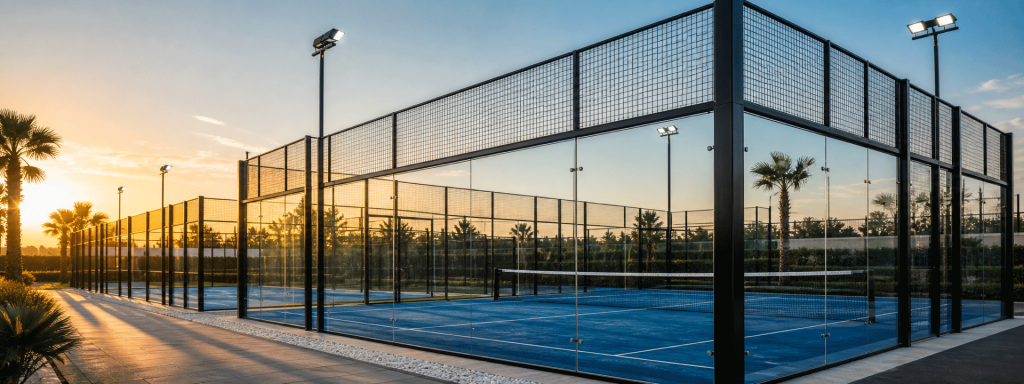
How Much Does It Cost to Open a Padel Club in the USA?
There is no universal answer because every project is different.
A four-court outdoor facility in Texas will have very different costs compared with an eight-court indoor club in New York.
Investors should consider the following cost categories.
Land Acquisition or Lease
In many projects, land or lease costs represent one of the largest financial variables.
Urban locations typically provide stronger demand but involve higher costs. Suburban areas may offer lower costs while still serving affluent customer segments.
Court Construction
This includes:
Steel structure
Tempered glass
Artificial turf
Lighting systems
Net systems
Court accessories
Court quality significantly affects both player experience and long-term maintenance requirements.
Foundation and Drainage
A properly designed foundation is essential for court performance and durability.
Inadequate site preparation often leads to costly repairs later.
Permits and Zoning
Approval requirements vary by state, county and municipality.
Investors should evaluate permitting timelines early in the planning process.
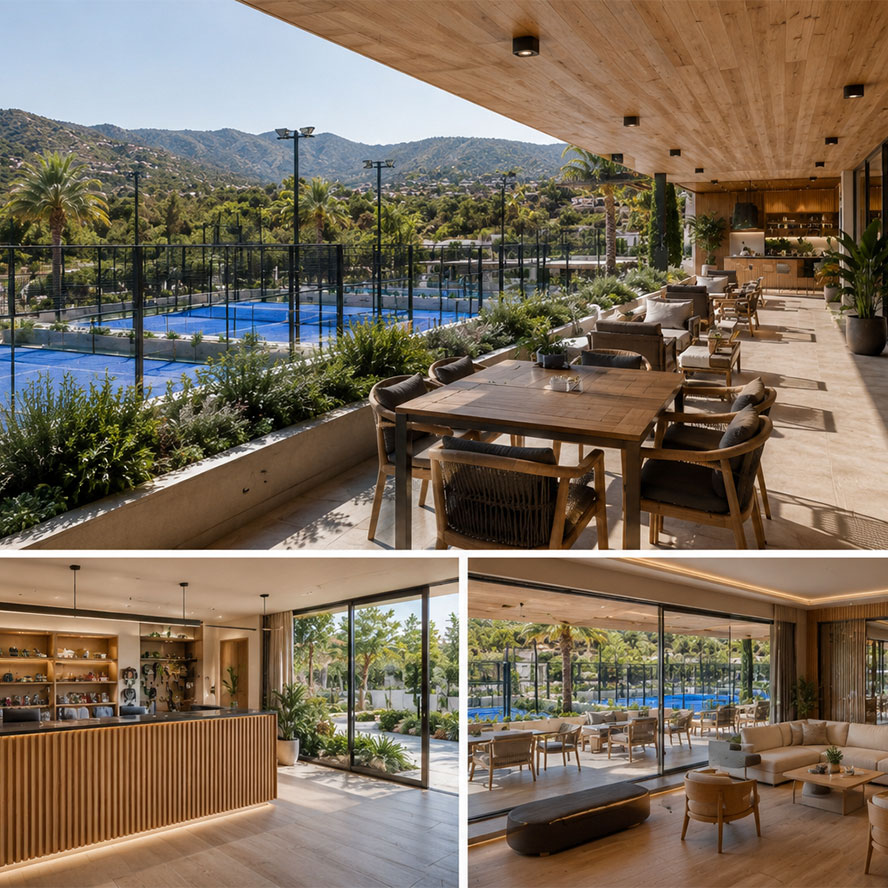
Clubhouse and Amenities
Many successful facilities include:
Reception area
Locker rooms
Lounge spaces
Pro shops
Café or food service
These amenities contribute to customer experience and additional revenue generation.
Technology and Software
Modern clubs typically require:
Court booking systems
Membership management software
Payment processing systems
CRM and marketing tools
Staffing
Operating costs may include:
Club manager
Coaches
Front desk personnel
Maintenance staff
Marketing support
Marketing Launch Budget
Even in high-potential markets, player acquisition requires investment.
Opening campaigns, events, partnerships and local promotion are often necessary to establish awareness and build momentum.

How Many Padel Courts Do You Need to Start?
The ideal number depends on your objectives.
1-2 Courts
Best suited for:
Hotels
Resorts
Residential communities
Pilot projects
These facilities typically focus on guest experience rather than maximizing revenue.
3-4 Courts
A common entry point for commercial operators.
This size allows for:
Court rentals
Small tournaments
Coaching programs
Basic membership models
5-8 Courts
Often considered the most balanced commercial club format.
Benefits include:
Better scheduling flexibility
Larger membership base
More coaching capacity
Event hosting opportunities
8+ Courts
Typically associated with:
Regional destination clubs
Professional academies
Tournament venues
Multi-location operators
Larger facilities generally require greater capital investment but may benefit from stronger economies of scale.

Padel Club Revenue Model
One of the biggest advantages of a padel club compared with many recreational facilities is its ability to generate revenue from multiple sources.
Successful clubs rarely rely solely on court rentals. Instead, they build a diversified business model that increases customer lifetime value and reduces dependence on a single income stream.
Court Rentals
Court bookings are typically the foundation of a club’s revenue.
Revenue depends on:
Court utilization rate
Peak and off-peak pricing
Number of courts
Local market demand
In high-demand markets, prime evening and weekend hours often generate the majority of court rental revenue.
Membership Programs
Memberships create predictable recurring income and improve retention.
Common membership benefits include:
Discounted court bookings
Priority reservations
Member-only events
Coaching discounts
League participation
A strong membership model can significantly improve long-term business stability.
Coaching Programs
Coaching is often one of the highest-margin revenue streams.
Examples include:
Private lessons
Small group training
Beginner courses
Advanced player development
Corporate coaching sessions
Many successful clubs generate substantial revenue through coaching rather than court rentals alone.
Junior Programs
Youth programs help create future members while generating consistent income.
Popular offerings include:
After-school programs
Summer camps
Junior academies
Family memberships
Corporate Events
Businesses increasingly seek unique team-building activities.
Padel’s social nature makes it particularly attractive for:
Corporate events
Client entertainment
Employee wellness programs
These events often generate premium pricing compared with standard court rentals.
Tournaments
Well-organized tournaments provide additional revenue through:
Entry fees
Sponsorships
Food and beverage sales
Increased court utilization
Tournaments also help strengthen community engagement and club visibility.
Equipment Sales
Many clubs generate retail revenue from:
Racquets
Balls
Shoes
Bags
Apparel
Retail sales can become an important supplementary revenue source.
Food and Beverage
As clubs mature, social spaces often become major profit centers.
Coffee, beverages and light meals encourage players to stay longer and spend more during each visit.
Sponsorships
Local businesses and sports brands may support successful clubs through sponsorship agreements, events and partnerships.
Hotel and Resort Packages
For hospitality projects, padel can become part of a premium guest experience package that combines accommodation, wellness and sports activities.
Padel Club ROI: What Affects Payback Period?
Many investors focus on one question:
How long will it take to recover my investment?
The answer varies significantly depending on several factors
Court Utilization Rate
This is often the single most important metric.
A club operating at 30% utilization will produce dramatically different results from a club operating at 60% or 70%.
Improving utilization generally has a greater impact on profitability than simply increasing prices.
Court Pricing
Higher pricing can increase revenue, but only if local demand supports it.
Investors should balance pricing with occupancy and customer retention.
Membership Retention
Acquiring members is expensive.
Retaining members is far more profitable.
Clubs with strong communities and regular programming typically achieve better retention rates.
Coaching Revenue
Coaching often represents a high-margin revenue stream that can accelerate ROI.
Real Estate Costs
Rent or land costs directly affect profitability.
Even successful clubs can struggle if real estate expenses are excessive.
Construction Costs
Overbuilding or choosing unnecessarily expensive facilities can extend payback periods.
A phased growth strategy is often more effective than excessive upfront investment.
Weather Conditions
Outdoor facilities may experience reduced utilization during extreme weather conditions.
Indoor and covered facilities typically provide more stable year-round revenue.
Events and Community Building
Strong communities tend to generate:
More repeat bookings
Higher membership retention
Greater participation in events and leagues
These factors directly influence long-term ROI.
Best Locations for Padel Clubs in the USA
Location is often the difference between a successful club and a struggling one.
The best locations typically combine population density, disposable income and an active lifestyle culture.
Florida
Florida has become one of the most promising padel markets in the country.
Strong tourism, favorable weather and international influence make it attractive for both Commercial Clubs and hospitality projects.
Texas
Rapid population growth and increasing interest in recreational sports continue to create opportunities throughout Texas.
California
California offers large target demographics and strong participation in fitness and racquet sports.
However, real estate costs can be significantly higher.
Arizona
Year-round outdoor activity and growing residential communities support padel development.
New York and New Jersey
These markets offer access to affluent populations and premium club members.
Indoor facilities often perform particularly well in these regions.
Nevada
Las Vegas and surrounding areas present opportunities through hospitality, tourism and mixed-use developments.
Additional Location Considerations
Before selecting a site, investors should evaluate:
Household income
Population growth
Sports participation trends
Competition
Visibility
Parking
Accessibility
Nearby complementary businesses

Indoor vs Outdoor vs Covered Padel Club Investment
Each model offers distinct advantages and challenges.
Outdoor Padel Clubs
Advantages
Lower initial investment
Faster construction timelines
Lower operating costs
Challenges
Weather dependency
Seasonal demand fluctuations
Noise considerations
Best For
Warm climates
Resorts
Residential communities
Entry-level commercial projects
Covered Padel Clubs
Advantages
Improved weather protection
Higher annual utilization
Better player comfort
Challenges
Higher construction costs
Best For
Premium clubs
Destination facilities
High-demand markets
Indoor Padel Clubs
Advantages
Year-round operations
Consistent player experience
Better climate control
Challenges
Higher real estate costs
Greater facility investment
Best For
Urban markets
Membership-focused clubs
High-density population centers

Padel Club Business Plan Checklist
Before launching a project, investors should complete the following planning process:
Market Research
Understand demand, competition and customer demographics.
Site Selection
Evaluate visibility, access, parking and future growth potential.
Court Quantity Planning
Determine the optimal number of courts based on project goals and budget.
Target Audience
Define primary customer groups.
Examples include:
Families
Young professionals
Corporate groups
Students
Hotel guests
Pricing Strategy
Develop realistic pricing for:
Court rentals
Memberships
Coaching
Events
Membership Model
Create membership structures that encourage retention.
Coaching Program
Develop training programs that support both revenue and player development.
Tournament Calendar
Plan events that increase engagement and visibility.
Construction Budget
Establish realistic budgets and contingency plans.
Technology Systems
Select booking, CRM and payment platforms.
Marketing Launch Plan
Develop a strategy for customer acquisition before opening.
Supplier Selection
Choose experienced partners capable of supporting long-term success.
Risks of Investing in a Padel Club
Every investment opportunity involves risk.
Understanding these challenges early helps reduce costly mistakes.
Market Education
In some areas, customer awareness may still be limited.
Customer Acquisition
Building an active player base takes time and marketing investment.
Site Selection Errors
A poor location can severely limit growth potential.
Construction Delays
Permits, zoning approvals and contractor issues can delay opening dates.
Noise Complaints
Certain locations may face neighborhood concerns related to sports activity and lighting.
Weather and Maintenance
Outdoor facilities require ongoing maintenance and may experience weather-related disruptions.
Cash Flow Pressure
Many clubs require time before reaching full utilization.
Investors should prepare sufficient operating capital.
Competition
Padel may compete for attention alongside tennis, pickleball, fitness clubs and other recreational activities.

How to Choose a Padel Court Supplier
The quality of the supplier can directly influence project costs, construction timelines and long-term court performance.
Before selecting a partner, investors should evaluate several factors.
Compliance with Official Standards
Courts should meet international specifications and competition requirements.
Experience with U.S. Projects
Suppliers familiar with U.S. regulations and construction requirements often reduce project risk.
Indoor and Outdoor Expertise
Different environments require different engineering approaches.
Installation Support
A reliable supplier should provide installation guidance and technical assistance.
Drawings and Specifications
Professional engineering documentation improves planning and approval processes.
Budget Planning Support
Experienced suppliers can help investors develop realistic project budgets.
Get a Padel Club Investment Plan
Every successful padel project begins with careful planning.
Whether you are considering a boutique club, a large commercial facility, a hotel installation or a residential development, understanding your market, budget and operational model is essential.
Before committing capital, investors should evaluate:
Project location
Available land
Estimated budget
Number of courts
Indoor, outdoor or covered configuration
Target audience
Revenue objectives
A preliminary feasibility study and Investment Plan can help identify opportunities, reduce risks and establish a clear path toward profitability.
If you are evaluating a padel project in the United States, request a consultation, budget estimate or conceptual court layout to better understand the potential of your investment.

Frequently Asked Questions
Is padel a good investment in the USA?
Padel has strong growth potential in the United States, particularly in affluent markets, sports-focused communities and hospitality destinations. However, investment success depends heavily on location, operations, utilization rates and market development.
How much does it cost to open a padel club in the USA?
Costs vary depending on land, lease terms, number of courts, indoor or outdoor configuration, permits, clubhouse facilities and operating requirements.
How many courts should a new padel club start with?
Many commercial clubs begin with 3-4 courts, while larger facilities often operate with 5-8 courts or more.
How do padel clubs make money?
Revenue typically comes from court rentals, memberships, coaching, tournaments, events, sponsorships, food and beverage sales and equipment retail.
What is the ROI of a padel club?
ROI depends on construction costs, court utilization, pricing strategy, operating expenses and customer retention.
Is indoor or outdoor padel better for investment?
Outdoor projects generally require lower initial investment, while indoor facilities can provide more stable year-round revenue. Covered courts often represent a balanced middle-ground solution.
Where are the best states to open a padel club?
Florida, Texas, California, Arizona, Nevada, New York and New Jersey are among the most promising markets, particularly in affluent and active communities.
Can a tennis club add padel courts?
Yes. Existing tennis clubs often have infrastructure, members and operational experience that make padel expansion a logical opportunity.
Is padel competing with pickleball?
Both sports target social and recreational players, but padel is often positioned as a more club-oriented and premium racquet sport experience.
At PadelStructure, we provide free planning resources to help investors make more informed decisions:
Padel Court Space Planning Calculator
Padel Court Construction Cost Calculator
Padel Club ROI Calculator
Padel Club Business Plan Guide
The most successful padel clubs are not built around the lowest construction cost.
They are built around sustainable profitability, efficient operations and long-term business growth.